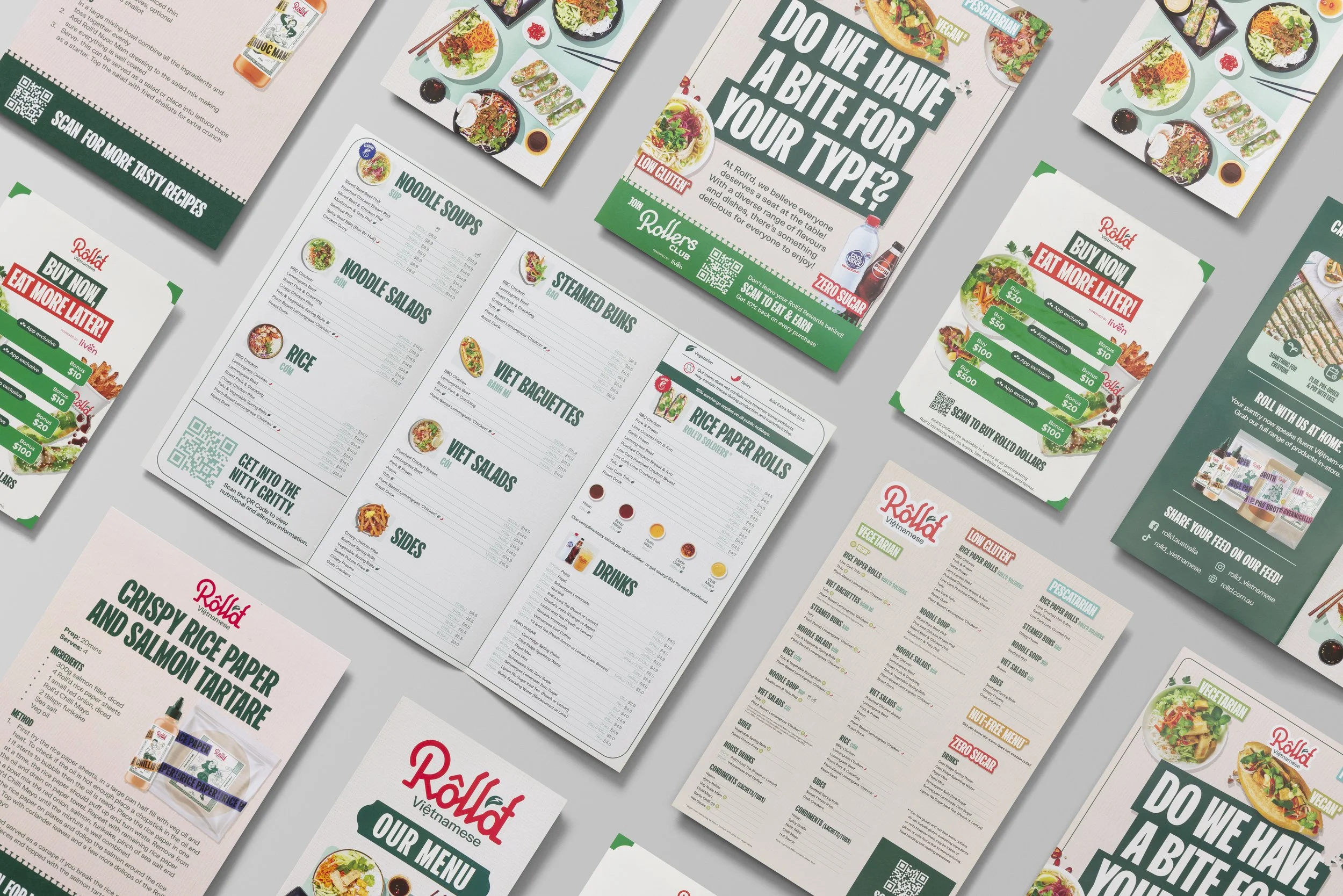
Proofing Perfection: Guaranteeing Colour and Design Consistency Pre-Press
In high-volume commercial printing, the final, perfect result is secured long before the presses run. The proofing stage is the invisible guardrail that prevents costly errors, manages client expectations, and guarantees brand colour consistency across all collateral. For production managers, designers, and brand custodians, mastering the art of the proof is non-negotiable.
The Purpose of Contract Proofs
A Contract Proof is the gold standard of quality assurance. It is not merely a quick printout; it is a meticulously calibrated print, often bearing a certification strip, that serves as the legal and technical benchmark for the entire print run.
Final Alignment: The contract proof guarantees that the colours, layout, bleeds, and image quality are precisely what the client signed off on. If the final printed piece deviates from the contract proof, we know the press run needs adjustment.
The Unifying Standard: For complex campaigns requiring reprints or collateral printed on different machines (e.g., a brochure printed offset and a banner printed digital), the contract proof ensures all materials adhere to the same unified colour standard, protecting brand consistency.
Understanding Delta E (ΔE): The Measure of Colour Accuracy
The human eye is subjective, but our presses are objective. To measure colour accuracy, Eastern Press uses the industry standard metric, Delta E (ΔE), which represents the numerical distance between two colours.
Low ΔE, High Precision: A ΔE value of 1.0 or less means the colour difference is generally imperceptible to the human eye. We use sophisticated spectrophotometers on press to read printed sheets and ensure the colour is kept within the tightest possible ΔE tolerance, guaranteeing your corporate blue or product red is identical across batches, countries, and print runs.

The Proofing Duo: Soft vs. Hard
Knowing which proofing method to use saves both time and money:
Proof Type
Method & Use
When to Use It
Soft Proofing
Reviewing a calibrated, high-resolution PDF on a colour-managed monitor.
Initial layout checks, text and image placement, and internal review. Not suitable for final colour approval.
Hard Proofing (Contract)
A physical print produced on a high-precision inkjet device, calibrated to simulate the final press conditions.
Final colour matching, client sign-off, and all colour-critical jobs (logos, packaging).
Crucially, never rely solely on soft proofing for final colour approval. The light, screen settings, and colour gamut of a monitor cannot replicate how ink will absorb and reflect light on paper.
Colour Space Management: Speaking the Printer’s Language
A major cause of colour failure is incorrectly submitting files in the wrong colour mode. The rule is simple and absolute:
CMYK, Not RGB: Digital screens use RGB (Red, Green, Blue) colour space. Commercial presses use CMYK (Cyan, Magenta, Yellow, Key/Black) inks. All final artwork must be converted to CMYK. If not, the press automatically converts it, often resulting in dull or unexpected shifts, particularly in vibrant blues and greens.
Using Profiles: We use industry-standard profiles (like GRACoL or SWOP) to manage the colour separation, ensuring your vibrant design translates smoothly and predictably onto the paper stock.
By adopting this culture of pre-press rigour, Eastern Press clients move forward with total confidence, transforming complex digital files into flawlessly consistent commercial collateral every time.